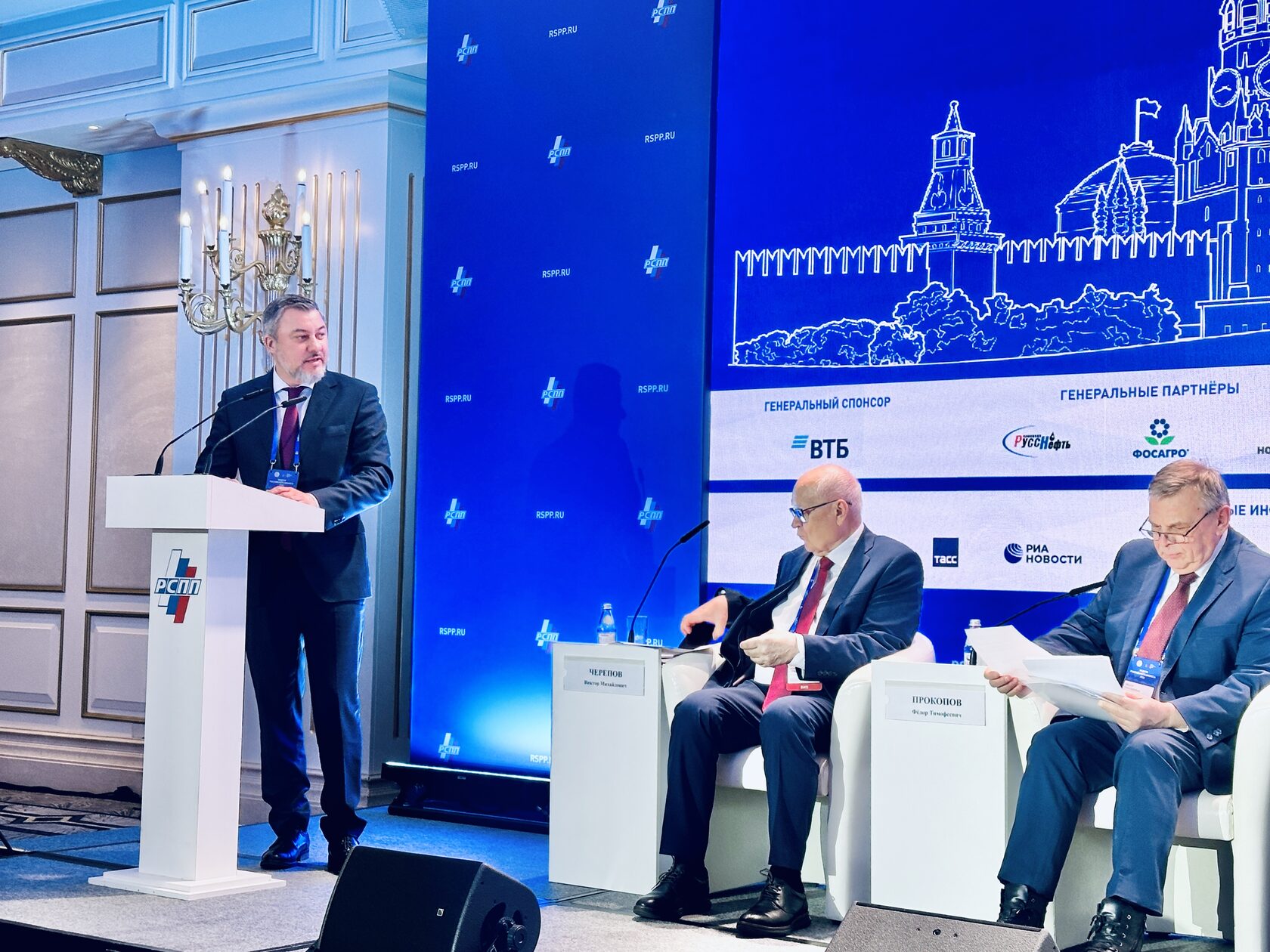
On February 16, opening the forum "Personnel of the Future: Interaction between Business and Government", the President of the Russian Union of Industrialists and Entrepreneurs Alexander Shokhin stated that the issue of providing personnel for the Russian economy is becoming a priority area of interaction between the state and business.
“The shortage of personnel continues to top the list of the most acute problems for Russian business. It is observed in more than two-thirds of companies,” noted the head of the RSPP.
Characterizing the challenges faced by the Russian labor market, Deputy Prime Minister of the Russian Federation Tatyana Golikova paid special attention to the “qualification challenge”.
“More than ten years ago, the Ministry of Labor of Russia, together with all-Russian associations of employers, launched a large-scale project to form a new system of professional qualifications in Russia. Professional standards are a key part of this. This is one of the mechanisms for translating labor market requirements into the professional education system,” Tatyana Golikova stated.
She added that professional standards (currently over 1,700 of them) are direct action documents for the education system – they are taken into account when developing exemplary and main educational programs for secondary vocational and higher education.
Minister of Labour and Social Protection of the Russian Federation Anton Kotyakov focused on forecasting personnel needs, speaking about the recent transition to a 7-year forecast.
“I am very impressed that employers are participating as actively in forming the forecast today as they did last year, despite the increased complexity of the forecasting procedure itself. More than 300,000 enterprises with a staff of almost 23 million people responded to our request,” the Minister noted.
Director General of the National Agency for Qualifications Development (NAQD) Alexey Vovchenko reminded that the concept of a new General Agreement between the all-Russian association of trade unions, all-Russian associations of employers, and the Government of Russia for 2027-2029 is currently being formed.
“This document must fix measures dedicated to the development of the National Qualifications System. These include the practice of combining State Final Certification (SFC) and independent assessment of qualifications for college and university graduates, as well as increasing the importance of professional and public accreditation of educational programs. We propose to strengthen the role of professional communities in the implementation of our joint plans – to involve professional qualification councils in forecasting the need for labor resources,” Alexey Vovchenko stated.
Answering the question of the discussion moderator, Deputy Chairman of the National Council under the President of Russia for Professional Qualifications, Fedora Prokopova regarding the time required for a qualitative update of professional standards and qualifications, taking into account technological changes, Alexey Vovchenko noted that one year is sufficient for this. But first, according to his assessment, maps of such changes should be formed to make it clear which industries and professions are being discussed.
“Probably, there is nothing difficult in this work. 47 professional qualification councils have been created, they are quite active and are able to cope with the modernization of the professional standards they developed. We will ensure this work organizationally,” added the Director General of NARK.
The topic of professional qualifications was also raised in the speeches of other forum participants. In particular, the Chairman of the State Duma Committee on Labor, Social Policy and Veterans Affairs Yaroslav Nilov recommended implementing professional standards at a faster pace and making their requirements for employees mandatory.
“The shortage of personnel continues to top the list of the most acute problems for Russian business. It is observed in more than two-thirds of companies,” noted the head of the RSPP.
Characterizing the challenges faced by the Russian labor market, Deputy Prime Minister of the Russian Federation Tatyana Golikova paid special attention to the “qualification challenge”.
“More than ten years ago, the Ministry of Labor of Russia, together with all-Russian associations of employers, launched a large-scale project to form a new system of professional qualifications in Russia. Professional standards are a key part of this. This is one of the mechanisms for translating labor market requirements into the professional education system,” Tatyana Golikova stated.
She added that professional standards (currently over 1,700 of them) are direct action documents for the education system – they are taken into account when developing exemplary and main educational programs for secondary vocational and higher education.
Minister of Labour and Social Protection of the Russian Federation Anton Kotyakov focused on forecasting personnel needs, speaking about the recent transition to a 7-year forecast.
“I am very impressed that employers are participating as actively in forming the forecast today as they did last year, despite the increased complexity of the forecasting procedure itself. More than 300,000 enterprises with a staff of almost 23 million people responded to our request,” the Minister noted.
Director General of the National Agency for Qualifications Development (NAQD) Alexey Vovchenko reminded that the concept of a new General Agreement between the all-Russian association of trade unions, all-Russian associations of employers, and the Government of Russia for 2027-2029 is currently being formed.
“This document must fix measures dedicated to the development of the National Qualifications System. These include the practice of combining State Final Certification (SFC) and independent assessment of qualifications for college and university graduates, as well as increasing the importance of professional and public accreditation of educational programs. We propose to strengthen the role of professional communities in the implementation of our joint plans – to involve professional qualification councils in forecasting the need for labor resources,” Alexey Vovchenko stated.
Answering the question of the discussion moderator, Deputy Chairman of the National Council under the President of Russia for Professional Qualifications, Fedora Prokopova regarding the time required for a qualitative update of professional standards and qualifications, taking into account technological changes, Alexey Vovchenko noted that one year is sufficient for this. But first, according to his assessment, maps of such changes should be formed to make it clear which industries and professions are being discussed.
“Probably, there is nothing difficult in this work. 47 professional qualification councils have been created, they are quite active and are able to cope with the modernization of the professional standards they developed. We will ensure this work organizationally,” added the Director General of NARK.
The topic of professional qualifications was also raised in the speeches of other forum participants. In particular, the Chairman of the State Duma Committee on Labor, Social Policy and Veterans Affairs Yaroslav Nilov recommended implementing professional standards at a faster pace and making their requirements for employees mandatory.